
Sermorelin
What is Sermorelin?
Sermorelin is a synthetic analog of Growth Hormone-Releasing Hormone (GHRH 1-29), designed to stimulate the pituitary gland to produce and release endogenous growth hormone (GH). While it has a shorter half-life compared to peptides like CJC-1295, Sermorelin has been widely studied and used for its anti-aging, recovery, and metabolic benefits. It was originally FDA-approved for treating growth hormone deficiency in children.
Potential Benefits Shown in Studies
- Increasing natural growth hormone and IGF-1 levels
- Supporting lean muscle mass and fat loss
- Enhancing recovery, strength, and endurance
- Improving sleep quality and tissue repair
- Promoting youthful skin, hair, and joint health
- Supporting bone density and anti-aging effects
- Boosting energy and overall wellness
Mechanisms of Action
Sermorelin works by:
- Mimicking natural GHRH, binding to pituitary receptors
- Triggering pulsatile GH release, preserving physiologic rhythms
- Increasing IGF-1 levels, promoting muscle repair and cellular regeneration
- Avoiding GH oversaturation, allowing better feedback regulation
- Enhancing fat metabolism and tissue healing via GH/IGF-1 axis
Its action is more natural and self-limiting than exogenous growth hormone, making it ideal for long-term optimization strategies.
Research Highlights
Physiologic, Pulsatile GH Release
Sermorelin, a synthetic analog of GHRH (1–29), stimulates the pituitary gland to secrete growth hormone in natural, pulsatile patterns, maintaining feedback control and minimizing desensitization.
FDA-Approved for Pediatric GH Deficiency
Originally approved in 1997 for treating childhood growth hormone deficiency, Sermorelin showed efficacy in reversing pediatric growth failure without the constant hormonal exposure of direct GH therapy.
Molecular Structure
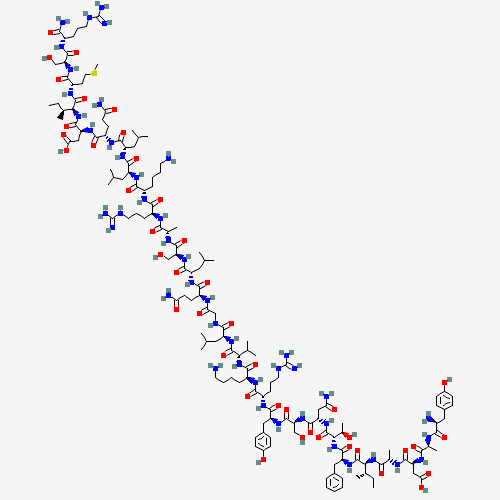
Tyr-Ala-Asp-Ala-Ile-Phe-Thr-Asn-Ser-Tyr-Arg-Lys-Val-Leu-Gly-Gln-Leu-Ser-Ala-Arg-Lys-Leu-Leu-Gln-Asp-Ile-Met-Ser-Arg-Gly
C₁₄₉H₂₄₆N₄₄O₄₂
~3357.93 g/mol