
Ipamorelin
What is Ipamorelin?
Ipamorelin is a synthetic growth hormone secretagogue and selective ghrelin receptor agonist. It is part of the GHRP (Growth Hormone Releasing Peptide) family but is distinct in its high selectivity and minimal side effects. Unlike earlier GHRPs such as GHRP-6 or GHRP-2, Ipamorelin does not significantly elevate cortisol or prolactin, making it a cleaner and more targeted option for stimulating endogenous growth hormone release.
Potential Benefits Shown in Studies
- Increasing natural growth hormone levels
- Supporting lean muscle development
- Enhancing recovery from workouts or injuries
- Improving sleep quality and depth
- Reducing body fat and improving metabolism
- Supporting skin elasticity and anti-aging effects
- Promoting bone strength and density
Mechanisms of Action
Ipamorelin works by:
- Stimulating the ghrelin receptor (GHS-R1a) in the hypothalamus and pituitary gland
- Triggering the natural release of GH in a pulsatile fashion
- Avoiding unwanted effects on appetite, cortisol, and prolactin levels
- Increasing circulating IGF-1 to promote tissue repair and growth
Research Highlights
Selective GH Secretagogue (GHS‑R1a Agonist)
Ipamorelin binds specifically to the ghrelin receptors in the pituitary, inducing growth hormone (GH) release without significantly impacting cortisol, ACTH, or prolactin—offering a cleaner profile compared to other GHRPs.
Musculoskeletal Support & Bone Health
Animal studies indicate that Ipamorelin may counteract glucocorticoid-induced muscle catabolism and increase bone mineral content, particularly enhancing tibial growth and bone density in female rats.
Precise, Pulsatile GH Release
Ipamorelin closely mimics natural GH secretion patterns by delivering targeted pulses, which helps maintain physiological hormone balance and potentially improves metabolic responses.
Potential Anti-Aging & Recovery Applications
Due to its selectivity and minimal hormonal side effects, Ipamorelin is under investigation as a research tool for muscle recovery, anti-aging protocols, and metabolic studies.
Molecular Structure
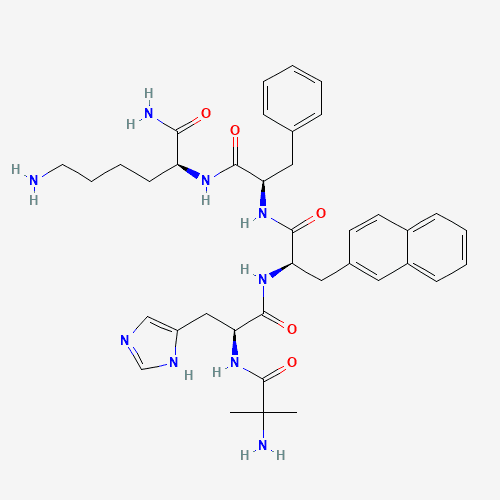
Aib-His-D-2-Nal-D-Phe-Lys-NH₂ (Aib = 2-aminoisobutyric acid, 2-Nal = 2-naphthylalanine)
C₃₈H₄₉N₉O₅
711.86 g/mol