
MOTS-c
What is MOTS-c?
MOTS-c is a mitochondrial-derived peptide made up of 16 amino acids. Unlike most peptides, MOTS-c is encoded within mitochondrial DNA and plays a key role in regulating cellular metabolism, insulin sensitivity, fat oxidation, and stress resistance. Its discovery has opened new avenues in metabolic health, anti-aging, and exercise performance research.
Potential Benefits Shown in Studies
- Enhancing energy production and endurance
- Improving insulin sensitivity and glucose regulation
- Supporting fat burning and weight management
- Protecting cells against metabolic and oxidative stress
- Promoting healthy aging and mitochondrial function
- Boosting physical performance in aging individuals
- Activating AMPK (a key energy-sensing pathway)
Mechanisms of Action
MOTS-c works by:
- Activating AMPK, a master regulator of energy homeostasis
- Increasing glucose uptake in muscle and liver cells, improving insulin sensitivity
- Enhancing fat oxidation, promoting the use of fat as fuel
- Improving mitochondrial function and reducing oxidative stress
- Protecting cells under metabolic stress (e.g. high-fat diet, inflammation, aging)
It mimics the benefits of exercise at a cellular level and is often referred to as a "mitochondrial hormone" in longevity research.
Research Highlights
Stress-Responsive Mitochondrial‑to‑Nuclear Signaling
MOTS‑c is encoded within the mitochondrial 12S rRNA gene and, in response to metabolic stress or exercise, translocates into the nucleus—where it modulates stress and metabolic adaptation genes via antioxidant response elements.
Activation of AMPK Pathway for Metabolic Regulation
MOTS‑c activates the AMPK energy-sensing pathway, enhancing glucose uptake, fatty acid oxidation, mitochondrial biogenesis, and overall metabolic flexibility.
Prevents Diet-Induced Obesity and Insulin Resistance
In rodent models, MOTS‑c treatment significantly improved glucose tolerance, reduced fat accumulation, and prevented insulin resistance and obesity stemming from high-fat diets.
Regulates Cellular Energy and Adaptation in the Nucleus
MOTS‑c functions as a mitochondrial-derived peptide that communicates energy status to the nucleus, promoting adaptive gene expression related to metabolism, stress resistance, and healthy aging.
Exercise Mimetic: Boosts Performance and Muscle Function
MOTS‑c mimics key benefits of exercise by improving glucose metabolism in skeletal muscle and enhancing physical endurance, positioning it as a potential agent to counteract age-related decline.
Molecular Structure
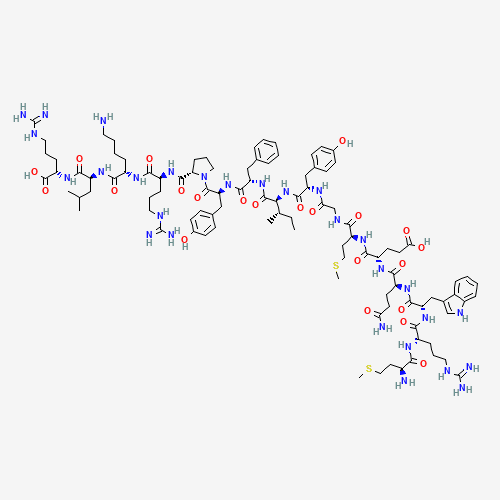
Met-Arg-Trp-Gln-Glu-Met-Gly-Tyr-Ile-Phe-Tyr-Pro-Arg (13 amino acids)
C₆₂H₉₆N₁₆O₁₄S₂
~1477.6 g/mol